Curriculum
The key to educating residents is making sure that learning sessions are interactive, the content is appropriate for what they need now, and they can focus on the session with minimal distraction. We achieve all three of these via the following:
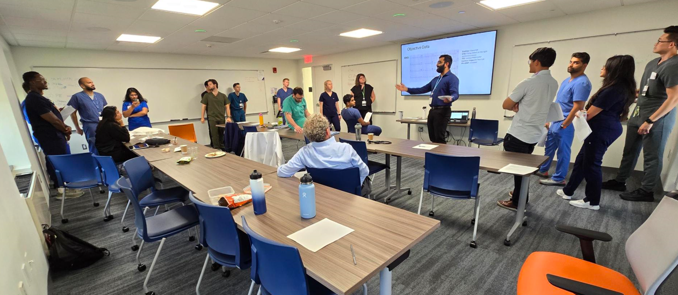
Learning sessions are run as case-based and team-based activities. We guide you on what to learn on your own and, when we come together, we help you apply that knowledge in clinical situations.
Level appropriate curriculum that is mapped out across the year and the program, so you get what you need when you need it.
Attendings cover patient care during our Academic Half Day so house staff can focus on learning.
Large dedicated classroom designed specifically for modern education delivery.
-
Schedule: Two protected hours every Tuesday and Thursday afternoon, providing a predictable structure that keeps other weekdays clear for clinical workflow.
Protected Time: Attendance is mandatory. Residents are fully excused from clinical duties as attendings provide patient coverage, allowing you to focus completely on learning.
Tiered Curriculum: Monthly breakout sessions are dedicated to PGY-1 and PGY-2/3 specific topics, ensuring the content is always relevant to your level of training.
Learning Style: Sessions are highly interactive, focusing on case-based discussion, team-based problem solving, and hands-on activities.
-
This is where you learn not just what to think, but how to think. The Clinical Reasoning Conference is a highly interactive, resident-led session designed to bridge the gap between textbook knowledge and the complex, real-world art of clinical decision-making. It's a dedicated space to practice and refine the thought processes of an expert diagnostician.
Resident-Led, Faculty-Guided: A senior resident (PGY-2 or PGY-3) presents a compelling, diagnostically challenging case they have managed. The session is attended by the entire residency program, from interns to seniors.
The Unfolding Case: The case is presented in stages—initial history and physical, key lab results, initial imaging. At each step, the group pauses to build a differential diagnosis, discuss cognitive biases, and debate the next best step.
Focus on the "Why": This is a safe space to be wrong. The goal isn't just to get the right answer, but to articulate the justification for your decisions. Attendings act as expert facilitators, guiding the discussion and highlighting key learning points without giving away the diagnosis.
Building Diagnostic Muscle: CRC systematically teaches you to recognize illness scripts, avoid diagnostic pitfalls, and build the intellectual framework of a seasoned clinician. It’s one of the most direct ways we train you for autonom
-
Resident-as-Teacher Model: Sessions are a dynamic mix of faculty-led core topic reviews and resident-led presentations, giving you the opportunity to develop your own skills as a clinical educator.
Integrated Board Review: We systematically incorporate MKSAP questions and high-yield board topics into didactics, ensuring you are consistently preparing for certification throughout your training.
Practical Quality Improvement: The curriculum includes a longitudinal QI component, empowering you to identify, analyze, and address real-world system challenges directly within our resident practice.
-
Northern Westchester Hospital Grand Rounds: Held Wednesday mornings, our in-person series features hospital leadership and regional experts focusing on topics tailored to the specific clinical needs and quality initiatives of our community.
Northwell Health System-Wide Grand Rounds: Every Thursday morning, you'll connect virtually to presentations from world-renowned experts across the full spectrum of medicine, covering cutting-edge research and landmark clinical updates.
Ambulatory Grand Rounds: A unique, interdisciplinary series on Friday mornings held in collaboration with the Phelps Hospital Family Medicine residency. This provides a rich, primary-care-focused perspective on complex outpatient topics.
Flexible & Accessible: Can't make a live session due to clinical duties? All three Grand Rounds series are recorded and available for asynchronous viewing, ensuring you never have to choose between patient care and essential learning.
-
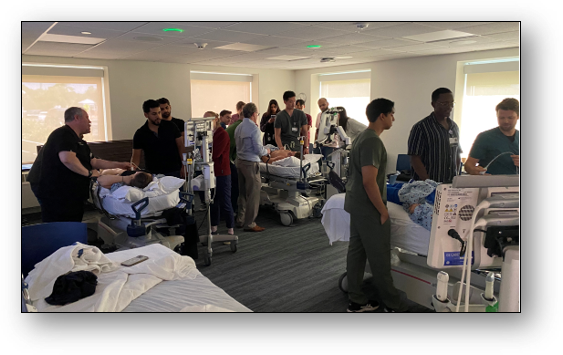
Intensive Intern Bootcamp: Your POCUS training begins immediately with a 1.5-day, hands-on workshop during intern orientation. You will arrive on the wards with the foundational skills to start using ultrasound confidently.
POCUS at Your Fingertips: This is not a curriculum where you have to hunt for a machine. Every inpatient floor team is equipped with its own dedicated handheld POCUS unit. Key team members—including the floor senior, on-call intern, and admitting team—are required to carry a device, weaving its use directly into routine patient assessment and real-time clinical decision-making.
Learn from National Experts: Our curriculum is led by faculty who are triple-boarded in Emergency Medicine, Internal Medicine, and Critical Care. They aren’t just master clinicians; they are nationally recognized educators who teach POCUS courses at the annual CHEST national conference.